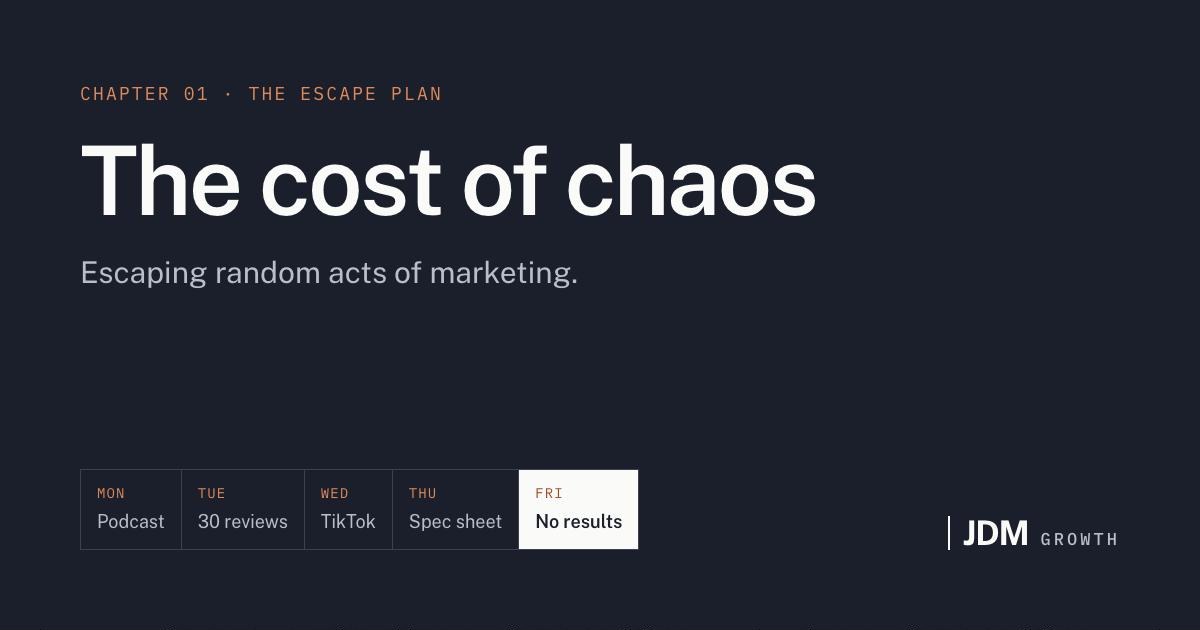
Monday morning brings the inevitable Slack ping.
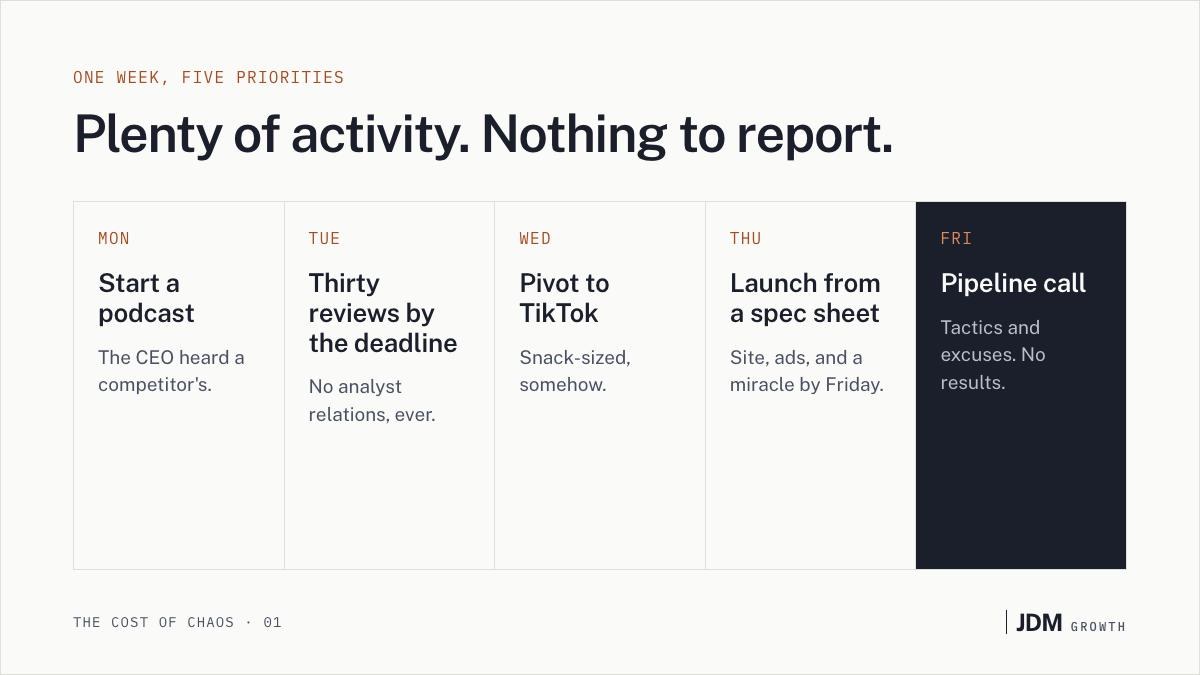
The CMO just left a leadership meeting. We need to start a podcast. Why? The CEO heard a competitor on their podcast over the weekend. Now we need one.
Tuesday is a fire drill to manufacture thirty Gartner Peer Insights reviews to meet an arbitrary award deadline. Never mind that we have never invested a single minute into analyst relations before.
Wednesday comes with a panicked pivot to snack-sized TikTok videos.
Thursday brings a new product release. Engineering hands over a dense, highly technical spec sheet. They expect a website update, digital ads, and a marketing miracle by Friday.
And on Friday's pipeline call, the head of sales asks for an update. You have nothing but reactive, tactical excuses, not results.
Running on a treadmill
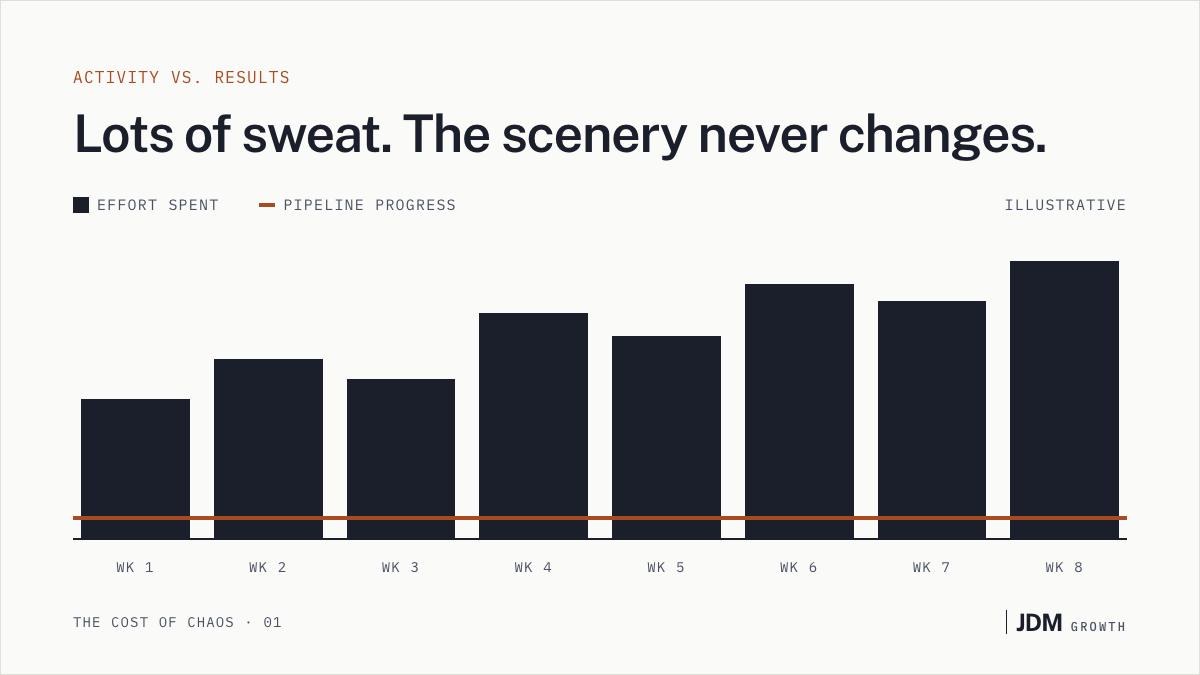
It's chaos. It feels like you're executing random acts of marketing without any way of knowing that you're making progress. It's like running on a treadmill. Lots of sweat and effort, but the scenery never changes.
It's not your fault.
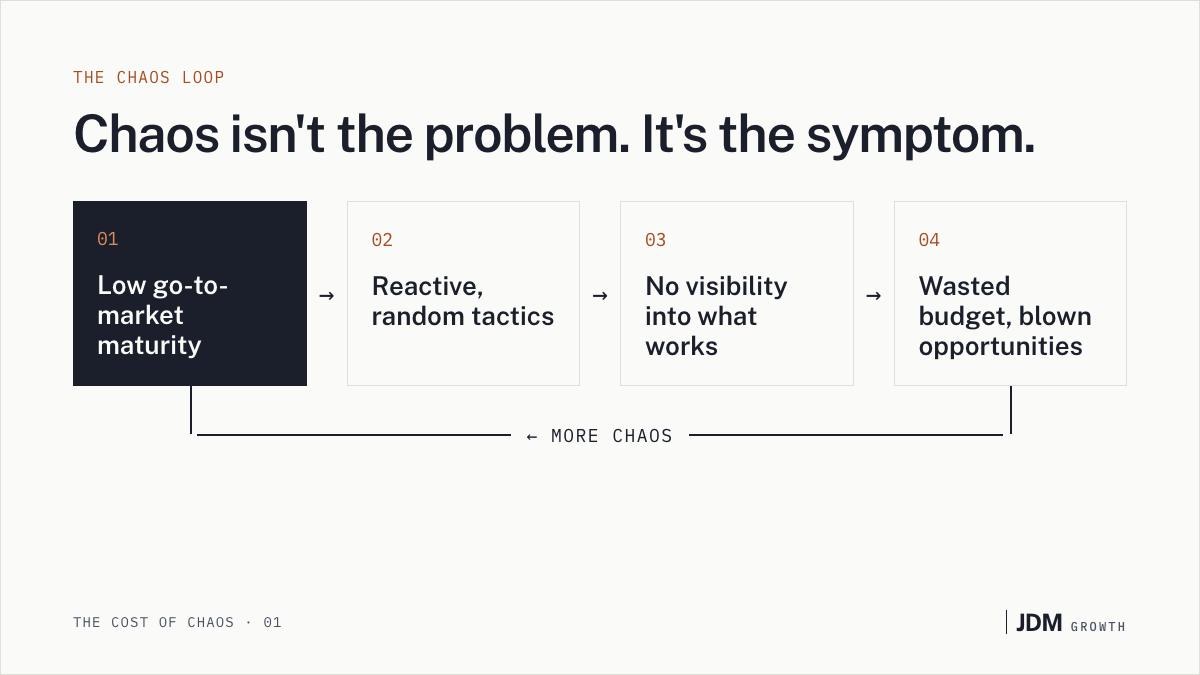
Rather, you're facing a common challenge in every startup without a solid model for growth. This is but a symptom of low go-to-market maturity.
The real cost of chaos
So what is the business cost of this chaos?
It is flying blind. It is mistaking activity for business results. The true cost is a lack of visibility that breeds even more chaos, leading to massive wasted resources and blown opportunities.
Nobody wants your mousetrap
While we're talking about symptoms, here's another.
When maturity is low, organizations naturally default to talking about themselves and their products. Product-focused leaders with a "revolutionary new mousetrap" often make a fatal mistake. They talk all about the mousetrap, and never about the value of having a house free of rodents. They think their back story and innovative features will create demand. They obsess over speeds, feeds, and technical capabilities that they believe make them different.
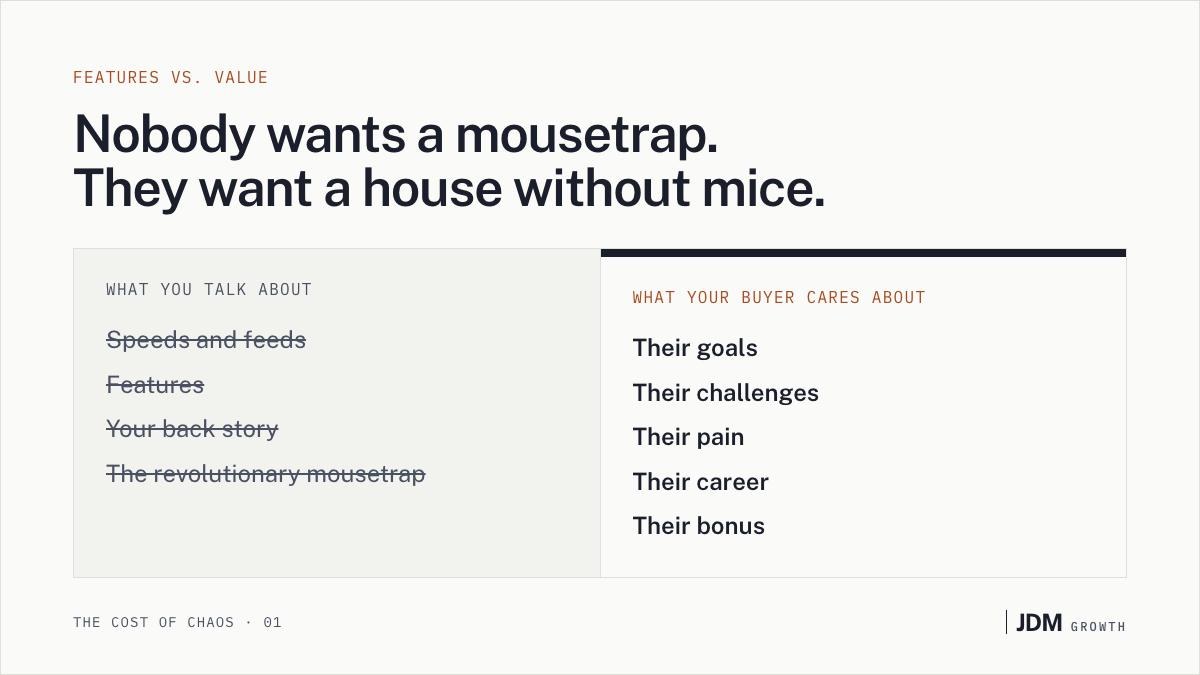
To a buyer, your speeds and feeds are just noise. Buyers do not care about your product features. They care about their goals, their challenges, and their pain. They are desperately looking for solutions to the things they struggle with every day.
If you do not speak the language of your prospects and talk about what they actually care about, how can you connect with them? You're just another vendor selling them. You're not a partner, you're not helping them, and you won't connect. And if you don't connect, you will never build trust.
Solve before you sell
If you want their attention, you have to offer value first. You deliver value by teaching them how to solve their challenges. You give them resources to get better at their jobs. You solve before you sell.
When you consistently deliver genuinely useful, valuable insight and resources without asking for a meeting, something powerful happens. You stop being a noisy (pushy) vendor. You start to become a trusted resource.
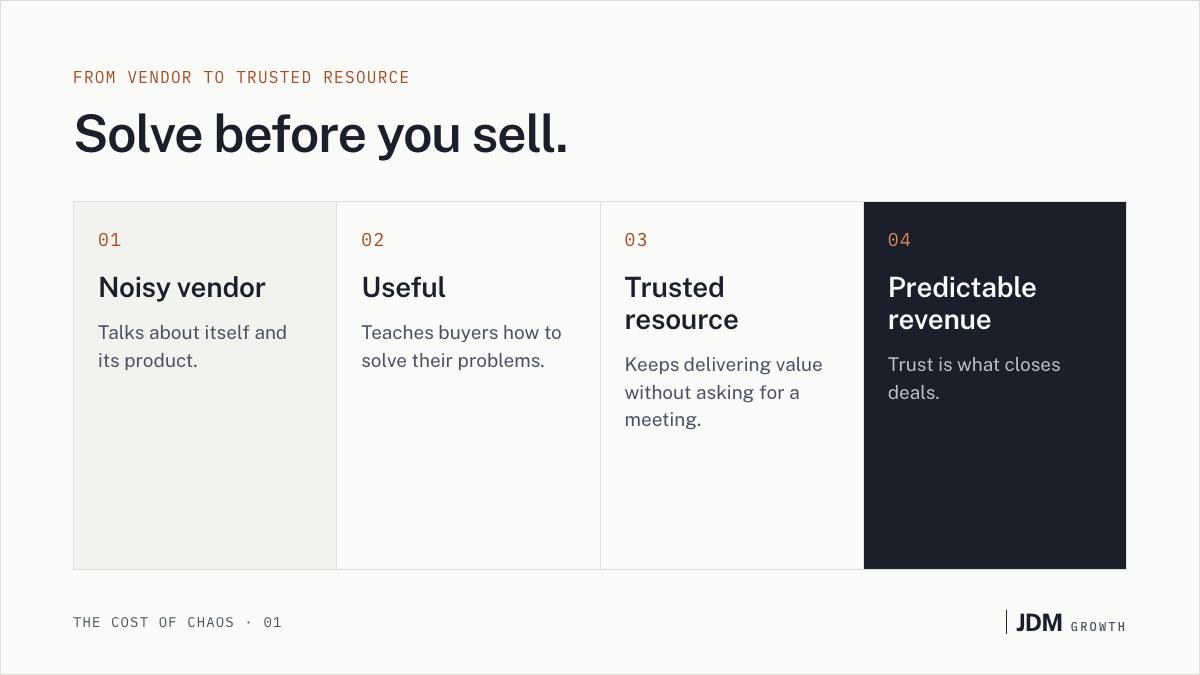
Good marketing generates clicks. Great marketing builds trust. And trust is what actually drives predictable revenue.
Right now, your sales and marketing teams are likely zigzagging in opposite directions. You are fighting the fire du jour. You are wasting money, burning out your team, and staring at a pipeline full of fiction.
If you stay on this treadmill, the noise will only get louder. Your competitors will figure out how to actually talk to your buyers while you are busy filming TikToks and updating spec sheets. You will burn through your cash and burn out your best people.
The way off the treadmill
There is a better way out of the chaos. It requires laying the foundation for a scalable growth engine. It requires an intentional, iterative path toward marketing maturity.
This series is your escape plan. We are going to stop rolling the dice on random tactics. Over the next few chapters, I will show you exactly how to align your teams, stop selling features, deliver undeniable value, and build a trust-driven revenue engine that actually closes deals.
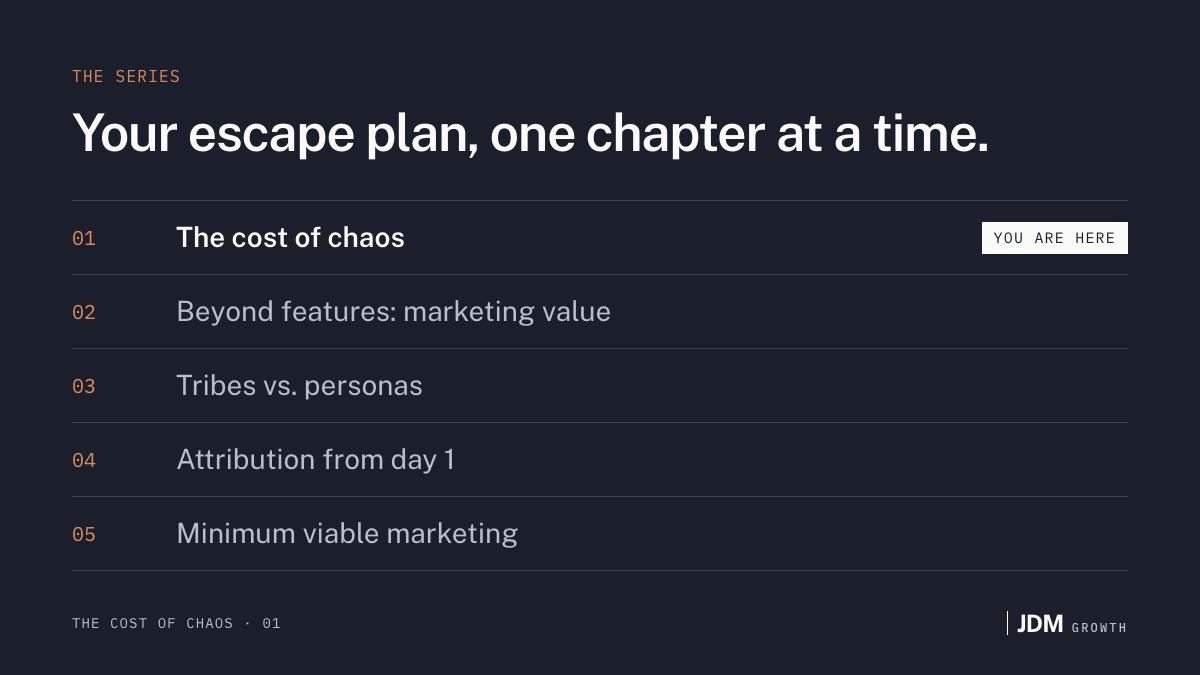
Are you ready to step off the treadmill? Let's get to work.
Recognize your week in this?
A Customer Truth Sprint shows you what your market is actually telling you in 14 days. Start with a conversation about where your pipeline is sticking.
Start a conversation